
If you’re building a digital presence for your business, you may have asked yourself:
Do I need a website or a landing page?
The answer isn’t always one or the other.
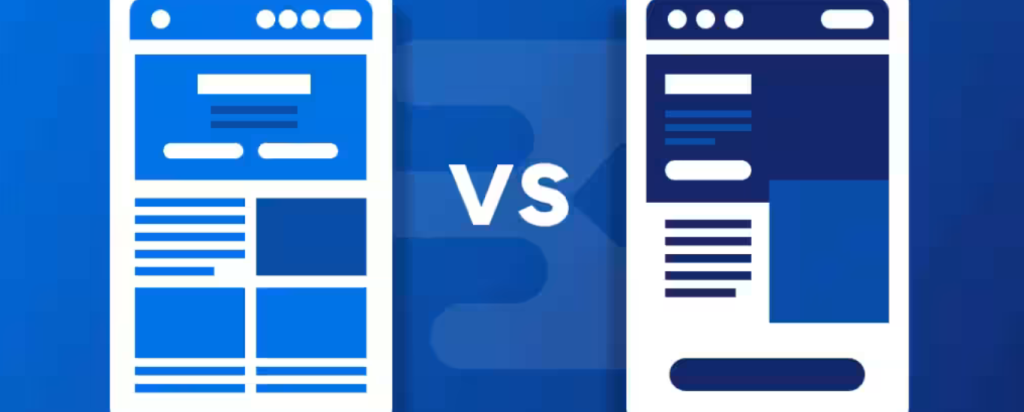
A website and a landing page serve different purposes. A website is designed to establish your broader online presence, communicate your brand, showcase your products or services and support different customer journeys.
A landing page, on the other hand, is typically built around a specific marketing objective, such as generating leads, promoting a service, selling a product, registering users or supporting an advertising campaign.
For businesses in the United States, Canada, Puerto Rico and Latin America, understanding the difference can help you invest in the right digital asset instead of spending money on a page that doesn’t match your business goals.
In this guide, we’ll explain:
- What a website is
- What a landing page is
- The difference between a website and a landing page
- When you should use each one
- Whether a landing page can replace a website
- How websites and landing pages work with Google Ads and social media
- What businesses should consider before investing
- How Marketive can help
What Is a Website?
A website is a collection of connected pages that represents your business online.
It can provide information about your company, services, products, team, location, expertise and contact options.
A professional business website may include:
- Home page
- About page
- Service pages
- Product pages
- Contact page
- Blog
- Portfolio
- Case studies
- FAQ
- Location pages
- Resources
- Booking functionality
- Ecommerce functionality
The purpose of a website is usually broader than a landing page.
Instead of focusing on one specific action, a website can support several customer journeys.
For example, a potential customer might visit your website to:
- Learn about your company
- Explore your services
- Read your blog
- View your portfolio
- Compare services
- Contact your business
- Book an appointment
- Make a purchase
A professionally designed website can therefore become the central hub of your digital presence.
If you’re evaluating the investment required for a business website, our guide on how much a website costs for a small business in 2026 can help you understand the main factors involved.
What Is a Landing Page?
A landing page is a focused page created around a specific marketing objective.
For example, a company may create a landing page specifically to:
- Generate leads
- Promote a service
- Sell a product
- Collect email addresses
- Promote an event
- Offer a free consultation
- Download a resource
- Promote a limited-time offer
- Support an advertising campaign
Unlike a traditional website, a landing page usually has a much narrower purpose.
For example:
Google Ad → Landing Page → Contact Form → Lead
The visitor arrives because they responded to a specific message, and the page continues that message with a clear next step.
This focus is one of the main differences between a landing page and a broader website.
Website vs. Landing Page: What’s the Difference?
The easiest way to understand the difference is to compare their primary objectives.
| Website | Landing Page |
|---|---|
| Broader online presence | Specific marketing objective |
| Multiple pages | Usually one focused page |
| Multiple navigation options | Limited distractions |
| Multiple services or products | One offer, service or campaign |
| Supports different customer journeys | Focuses on one conversion path |
| Builds long-term digital presence | Supports a specific campaign |
| Useful for SEO and brand authority | Often focused on conversion |
| Can contain many CTAs | Usually has one primary CTA |
Neither option is automatically better.
The right choice depends on what you want the visitor to do.
Website vs. Landing Page: Which Is Better?
The answer is:
It depends on your business objective.
If you need to establish your company online, explain multiple services, build credibility and attract organic traffic, a website is usually the better foundation.
If you already have a website but want to promote one specific service through an advertising campaign, a landing page may be more appropriate.
And in many cases, businesses should use both.
When Should Your Business Have a Website?
A professional website is usually appropriate if your business needs to establish a complete online presence.
You should consider a website if you:
Are launching a new business
A website gives customers a place to learn about your company and validate your business.
Offer multiple services
If your company provides several services, individual pages can explain each one in more detail.
Want to build long-term SEO visibility
A website gives you the structure to create service pages, informational content and other resources that can support organic search visibility.
Need to establish credibility
Potential customers often research a business before making contact.
A professional website can help answer their questions and demonstrate expertise.
Want to build a digital brand
Your website can bring together your branding, messaging, photography, content and customer experience.
Need ecommerce functionality
If you’re selling multiple products online, a complete website or ecommerce platform is generally more appropriate than a single landing page.
For businesses looking for a professional online presence, Marketive provides professional website design services designed around business objectives, brand positioning and digital strategy.
When Should Your Business Use a Landing Page?
A landing page becomes particularly useful when you have a specific offer and a specific audience.
Consider using one when:
You’re Running Google Ads
Suppose you’re advertising:
“Professional Website Design for Small Businesses.”
Instead of sending every visitor to your homepage, you could send them to a page specifically focused on website design.
The page can explain:
- The problem
- The service
- Benefits
- Process
- Examples
- Testimonials
- FAQs
- Call to action
This creates a more focused journey.
For businesses running paid search campaigns, Marketive also provides Google Ads services.
You’re Running Facebook or Instagram Ads
Social media advertising can also benefit from dedicated landing pages.
For example:
Facebook Ad → Landing Page → Quote Request
The landing page can continue the exact message introduced by the advertisement.
Marketive provides Facebook Ads services for businesses looking to reach targeted audiences through paid social campaigns.
You’re Promoting One Service
A landing page can be useful when you want to focus attention on a specific service without sending visitors through your entire website.
You’re Offering a Lead Magnet
For example:
Download the Free Small Business Marketing Guide
The landing page can explain the resource and ask the visitor to provide their email address.
You’re Launching a New Product
A landing page can focus entirely on the new product, its benefits and the desired action.
You’re Promoting an Event
Events, webinars, workshops and consultations can benefit from dedicated registration pages.
Can a Landing Page Replace a Website?
Sometimes, yes.
But it depends on the business.
A very small business, freelancer or professional may initially use a single-page website that functions similarly to a landing page.
For example:
- Name
- Services
- About
- Benefits
- Testimonials
- Contact
- CTA
However, this approach becomes limiting when the business begins to require:
- Multiple services
- SEO content
- Blog articles
- Portfolio
- Case studies
- Ecommerce
- Multiple locations
- Detailed service pages
- Advanced integrations
A landing page can support a business at a particular stage, but it should not automatically be treated as a permanent replacement for a complete website.
Can You Have a Website and Landing Pages?
Absolutely.
In fact, this is often one of the strongest approaches for businesses investing in digital marketing.
Your website can serve as your main digital presence.
Your landing pages can then support specific campaigns.
For example:
Website
→ Home
→ About
→ Services
→ Blog
→ Portfolio
→ Contact
And then:
Landing Page 1: Google Ads campaign for Website Design
Landing Page 2: Facebook Ads campaign for Social Media Management
Landing Page 3: Free Marketing Consultation
Landing Page 4: Branding Service
This creates a digital ecosystem where each asset has a specific role.
Website + Landing Page + Advertising: How It Works
Imagine that Marketive is running a campaign for a professional service.
The customer journey could look like this:
Google Search
↓
Google Ad
↓
Landing Page
↓
Service Information
↓
Trust Signals
↓
Contact Form
↓
Lead
↓
Sales Conversation
The landing page is therefore not an isolated design project.
It is part of a larger marketing system.
This is why landing page strategy should be connected with advertising, audience targeting, messaging and conversion.
What Should a High-Converting Landing Page Include?
A landing page should be focused, but that does not mean it should be empty.
A strong landing page may include:
1. A Clear Headline
The visitor should immediately understand what the offer is.
Instead of:
“Welcome to Our Company”
consider:
“Professional Website Design for Growing Small Businesses”
The second headline communicates a specific offer and audience.
2. A Strong Value Proposition
Explain why the visitor should care.
Answer:
What problem do you solve?
What result can the customer expect?
Why should they choose your business?
3. One Primary Call to Action
Examples include:
- Request a Quote
- Book a Consultation
- Get Started
- Schedule a Call
- Request a Free Audit
- Get a Custom Proposal
The CTA should clearly communicate the next step.
4. Trust Signals
Depending on the business, these may include:
- Testimonials
- Reviews
- Client logos
- Certifications
- Case studies
- Portfolio examples
- Guarantees
- Years of experience
- Results
Trust is particularly important when the visitor doesn’t know your business yet.
5. Relevant Information
The landing page should answer the questions the customer needs answered before taking action.
This could include:
- What’s included?
- Who is it for?
- How does it work?
- How long does it take?
- How much does it cost?
- Why choose you?
- What happens next?
6. A Simple Conversion Process
Don’t ask visitors for unnecessary information.
If the goal is to generate a consultation, you may only need:
- Name
- Phone
- Business
- Project information
The exact form should depend on what your sales team needs.
What Makes a Landing Page Different From a Homepage?
This is one of the most important distinctions.
Your homepage usually needs to serve multiple audiences.
For example, your homepage may direct visitors to:
- Services
- About
- Portfolio
- Blog
- Contact
- Products
- Locations
A landing page has a much narrower purpose.
For example:
“Get a Free Website Strategy Consultation.”
Everything on that page can support that one action.
This doesn’t mean a homepage cannot generate leads.
It simply means that a landing page is usually designed around a more specific conversion objective.
Should You Send Google Ads Traffic to Your Homepage?
Not necessarily.
The answer depends on the campaign.
If the advertisement promotes a specific service, a dedicated landing page can create a more direct connection between:
Search → Ad → Offer → Page → CTA
For example, someone searching for:
“website design agency for small business”
may respond better to a page specifically about professional website design than to a homepage listing ten different services.
However, this does not mean every advertising campaign requires a landing page.
The correct choice should be based on the campaign, search intent, offer and user journey.
Landing Pages and SEO
Landing pages can appear in search results, but not every landing page should be created primarily for SEO.
Some landing pages exist specifically for paid campaigns and may not need to target broad organic searches.
For SEO, the more important consideration is whether the page provides useful, relevant information for the searcher’s intent.
Google recommends creating people-first content that provides substantial value rather than producing pages simply to attract search traffic.
This means you shouldn’t create dozens of nearly identical landing pages just because you think they might generate more rankings.
Instead, create pages when they serve a legitimate customer or business purpose.
Website or Landing Page for a Small Business?
Let’s simplify the decision.
Choose a Website If:
- You’re building your brand
- You need multiple service pages
- You want long-term SEO
- You need a complete online presence
- You have multiple products or services
- You need a portfolio
- You want to publish content
- You need ecommerce
- You want customers to research your business
Choose a Landing Page If:
- You’re promoting one specific offer
- You’re running a paid advertising campaign
- You want to generate leads
- You’re launching a product
- You’re promoting an event
- You need a focused conversion experience
- You want to test a specific offer
Choose Both If:
- You have an established business
- You invest in advertising
- You want to generate leads
- You need SEO
- You have multiple services
- You want to build long-term brand authority
For many growing businesses, website + landing pages + marketing campaigns is the strongest combination.
Website vs. Landing Page: Quick Comparison
| Feature | Website | Landing Page |
|---|---|---|
| Brand presence | Excellent | Focused |
| Multiple services | Excellent | Limited |
| SEO content | Excellent | Depends on purpose |
| Lead generation | Excellent | Excellent |
| Paid campaigns | Useful | Excellent |
| Ecommerce | Excellent | Limited |
| Branding | Excellent | Focused |
| Navigation | Multiple options | Minimal |
| Primary objective | Multiple | Usually one |
| Long-term digital presence | Excellent | Limited |
| Campaign-specific offer | Limited | Excellent |
How Much Does a Landing Page Cost?
The cost of a landing page varies according to its complexity and the amount of strategy, design, copywriting, development and optimization required.
A simple page with basic information may require less investment than a conversion-focused landing page that includes:
- Audience research
- Copywriting
- Custom design
- UX strategy
- Conversion optimization
- Forms
- CRM integration
- Analytics
- A/B testing
- Advertising integration
This is why comparing landing pages only by price can be misleading.
The more important question is:
What is the landing page expected to accomplish?
A landing page designed to generate high-value leads deserves a different level of strategic planning than a simple informational page.
Common Mistakes Businesses Make With Websites and Landing Pages
Mistake 1: Using the Homepage for Everything
Your homepage should not necessarily be responsible for every campaign, audience and offer.
Mistake 2: Creating a Landing Page Without a Clear Objective
Before designing the page, determine what action you want the visitor to take.
Mistake 3: Having Too Many Calls to Action
Too many competing actions can make the user journey less clear.
Mistake 4: Ignoring Mobile Users
Your landing page needs to work properly on smartphones and tablets.
Mistake 5: Sending Paid Traffic to a Poorly Relevant Page
The message of the ad and the page should make sense together.
Mistake 6: Focusing Only on Design
A beautiful page without a clear offer, strong messaging and conversion path may not perform as expected.
Mistake 7: Not Measuring Results
If you are using a landing page for marketing, track the results.
Depending on the campaign, you may monitor:
- Visitors
- Click-through rate
- Form submissions
- Conversion rate
- Cost per lead
- Cost per acquisition
- Sales
How Marketive Can Help With Websites and Landing Pages
At Marketive, we believe websites and landing pages should be designed according to the role they play in a business’s digital strategy.
A website may be the foundation of your online presence.
A landing page may be the conversion destination for a specific campaign.
Social media may generate awareness and traffic.
Google Ads and Facebook Ads may bring targeted visitors.
Branding creates consistency across the experience.
When these elements work together, your digital presence becomes more than a collection of individual pages.
Marketive provides professional website design, as well as digital marketing services for businesses in Latin America, the United States, Canada and Puerto Rico.
If your business needs a focused campaign experience, landing pages can be incorporated into the broader marketing strategy.
You can also explore the Marketive portfolio to see examples of the agency’s digital work.
Frequently Asked Questions
Is a landing page the same as a website?
No. A website is generally a broader online presence made up of multiple pages and customer journeys. A landing page is typically designed around a specific marketing objective.
Is it better to have a website or a landing page?
Neither is universally better. A website is generally better for establishing a complete digital presence, while a landing page is useful for focused campaigns and specific conversion objectives.
Can a landing page replace a website?
For some very small businesses or simple projects, a single-page website may be enough initially. However, businesses that need multiple services, SEO content, ecommerce or a broader digital presence will generally benefit from a complete website.
Do I need a landing page if I already have a website?
You may. Landing pages can be useful for advertising campaigns, specific services, lead-generation offers, product launches and other focused marketing activities.
Should I use a landing page for Google Ads?
It can be a strong option when the landing page closely matches the advertising message and provides a clear conversion path. However, the right destination depends on the campaign and search intent.
Can a landing page rank on Google?
Yes. A landing page can appear in organic search results when it provides relevant and useful content. However, not every landing page needs to be designed primarily for SEO.
How many landing pages should a business have?
There is no universal number. Businesses should create landing pages based on genuine campaigns, offers, audiences and conversion objectives rather than creating large numbers of nearly identical pages.
How much does a landing page cost?
Pricing varies according to design, copywriting, strategy, functionality, integrations and optimization. A conversion-focused landing page generally requires more work than a simple informational page.
Should a landing page have a navigation menu?
It depends on its purpose. Some campaign landing pages intentionally minimize navigation to keep visitors focused on the primary action. Other pages may benefit from additional navigation when users need more information before converting.
Can Marketive create both my website and landing pages?
Yes. Marketive provides professional website design and digital marketing services that can include landing pages as part of a broader strategy for businesses in international markets.
Final Thoughts: Website or Landing Page?
The decision between a website and a landing page shouldn’t be based simply on which one is cheaper or easier to create.
Think about the purpose.
If your goal is to establish your brand, showcase multiple services, build credibility and develop long-term organic visibility, a professional website is usually the right foundation.
If your goal is to promote one offer, support an advertising campaign or generate leads through a focused conversion path, a landing page may be the better tool.
And if your business is actively investing in digital marketing, you may not have to choose.
You can use both.
Website for your digital presence.
Landing pages for focused campaigns.
Social media for attention and engagement.
Advertising for targeted traffic.
SEO for long-term visibility.
Together, these elements can create a stronger digital marketing ecosystem.
If you’re not sure whether your business needs a website, a landing page or both, contact Marketive to discuss the right digital strategy for your business.
The goal isn’t to build more pages. The goal is to build the right pages for the right customer journey.
